Mātai Kōkako Conservation Project
EST 2022
MEASURING PROGRESS
How do we measure progress?
The measurement of progress of the programme is a mixture of science and observations.On the scientific assessment front, the use of tracking tunnels across the site has been the measure of choice.
Tracking tunnels
The tracking tunnel process measures the footprints from small animals and insects as they track across an ink pad, and on to clear card after being attracted into the tunnel by a non-toxic lure. We are advised that the standard test length is a 24-hour survey i.e., the cards go in on day 1 and get extracted and read approximately 24 hours later.The photo below shows 5 sets of tracking tunnels (TT) across the site – shown as TT 1 to TT 5. Each of these lines has 5 tracking tunnels at approximately 50 m spacings, making each line 250 m long.In July 2023, an off-site tracking tunnel line was set up as a control. This was set up in the native bush immediately west of the site, across the road.
.JPG)
Each tracking tunnel run takes 2 full consecutive days. We are managing a tracking tunnel run around Christmas time and another one in the middle of the year. In due course this will expand to 4 tracking tunnel rounds per year, as resources permit.
See the photographs below. The interpretation of the tracking tunnel round is presented as evidence of rodent activity (mice and rats) on any tracking tunnel card as a percentage out of the 25 cards across the site. The control cards are not counted in this equation – this is for comparative information.
Before baiting and trapping began
After 9 months of the programme


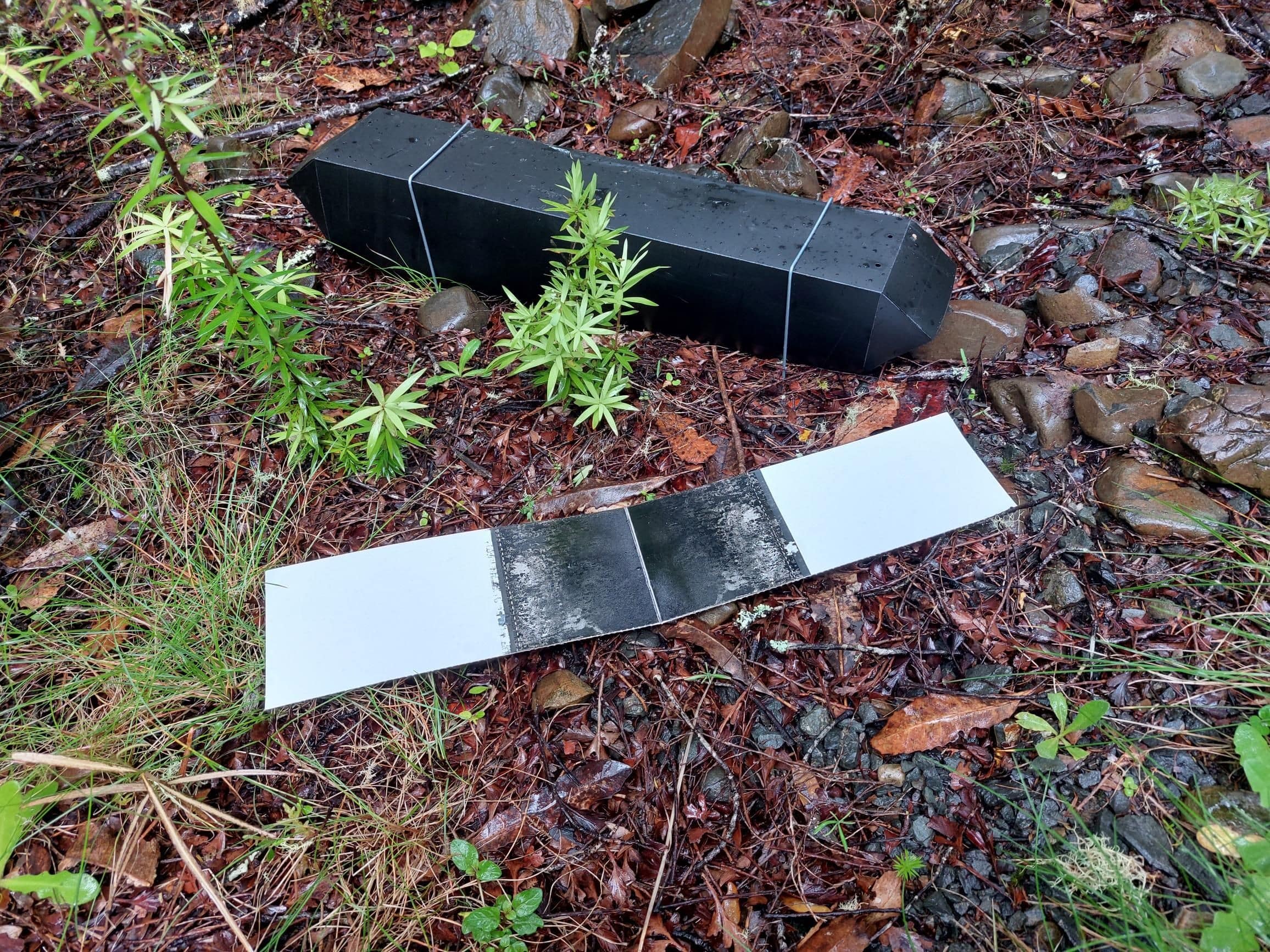
Top left - Approx 3 day exposure. Common in many tracking tunnels.
Bottom - A tracking tunnel with a blank inked card alongside.
Top right - Something large! Kitten or ferret suspected. Found infrequently. Again, approx 3 day exposure.
An example of rat prints (top) and insect prints (bottom). Standard 24-hour test. Rat prints on one card only across the project site (Dec 2022)